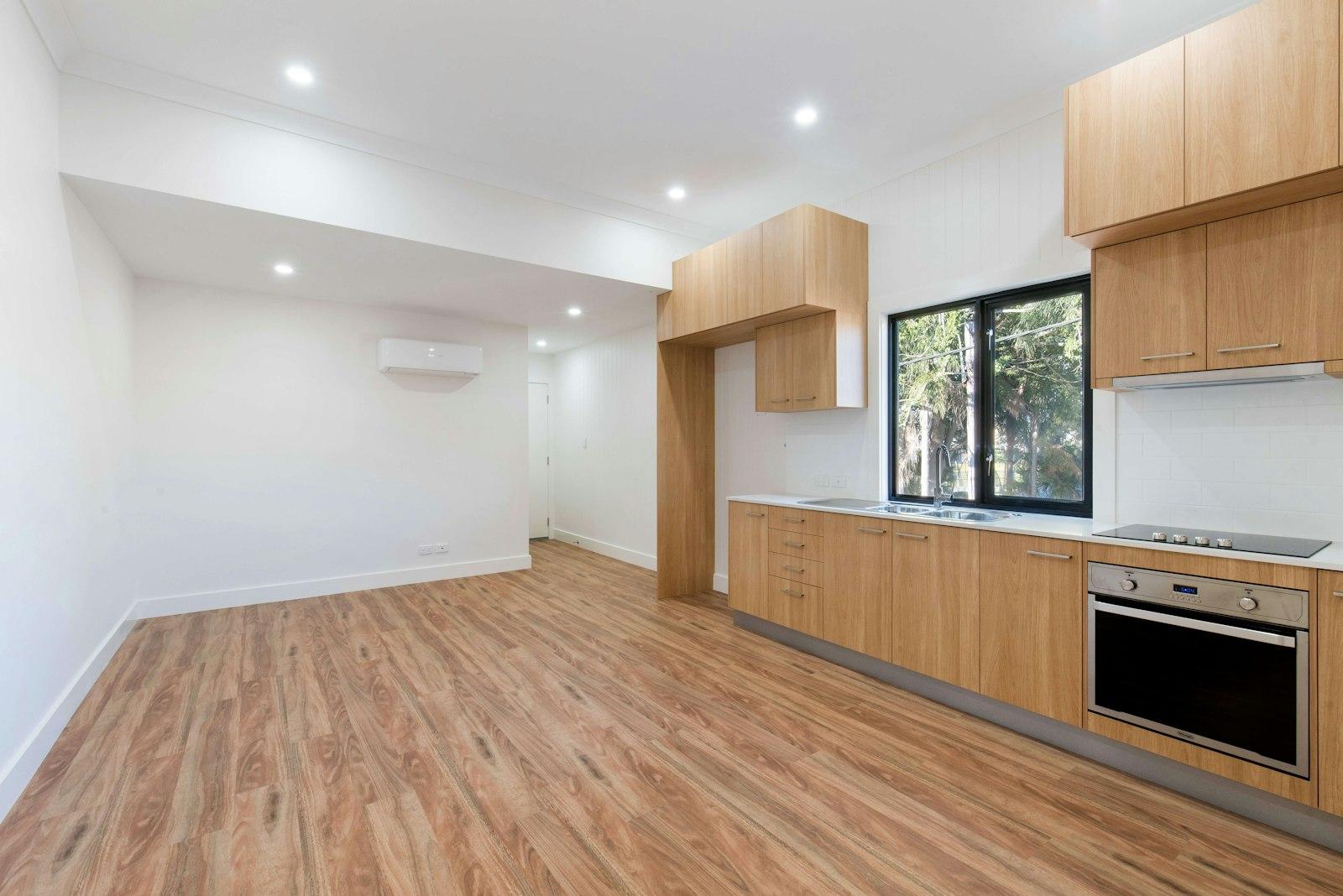
Comparison
LVT (luxury vinyl tile or plank) is a flexible, waterproof vinyl floor that can be glued down or clicked together, and it is softer and quieter underfoot. Laminate is a rigid board with a wood-fibre core and a very hard top layer, so it feels firmer and resists scratches extremely well, but it does not like standing water. LVT is the safer pick for kitchens, bathrooms and laundries; laminate excels in dry, busy rooms.
What LVT actually is
LVT stands for luxury vinyl tile, though it is just as often sold as planks. It is a layered vinyl product: a backing, a printed design layer that reproduces timber or stone, and a clear wear layer on top. The thickness of that wear layer, usually given in millimetres, is one of the best guides to how well it will last in a busy home.
LVT comes in two main formats. Glue-down LVT is bonded to a smooth, prepared subfloor and is very stable and quiet. Click LVT locks together and floats, which can suit some renovations. We will recommend the right one for your subfloor and room.
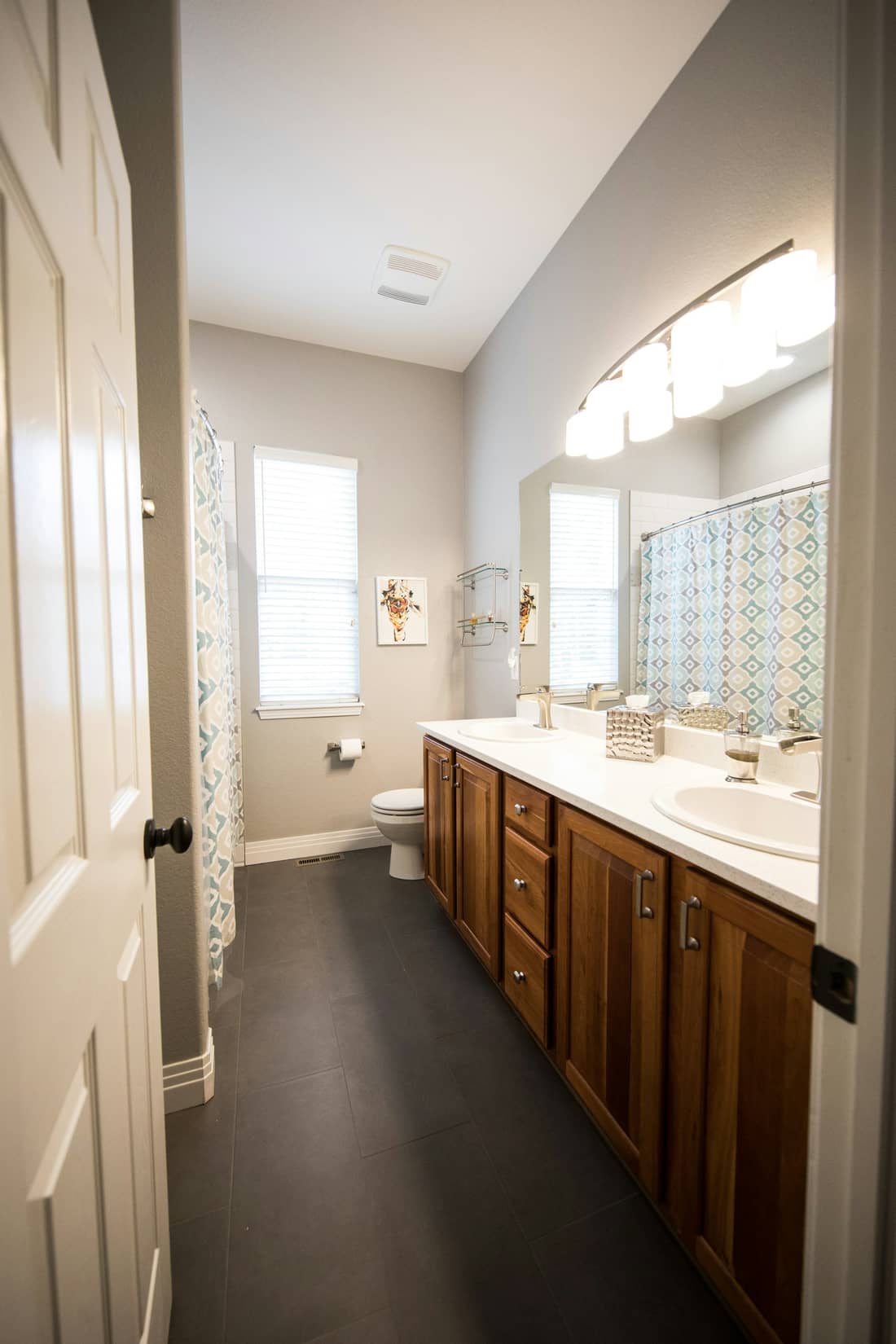
Where laminate does better
Laminate's surface is harder than vinyl's, which makes it outstanding against scratches from pets, grit and furniture. It is also a thicker, stiffer board, so it bridges minor subfloor imperfections more easily and feels more like real timber when you walk on it.
For a dry lounge, hallway or bedroom in a busy family home, a good laminate over quality underlay is a strong, cost-effective floor.
Where LVT does better
Water is the big one. LVT is waterproof, so it handles kitchens, bathrooms, laundries and entries without the swelling risk laminate carries. It is also softer and warmer underfoot and generally quieter, especially when glued down.
Because it is thin and flexible, LVT can also suit rooms where floor height matters, such as when meeting an existing floor in the next room.

Subfloor preparation
Thin, flexible LVT shows what is underneath it. Any bumps, ridges or dips in the subfloor can telegraph through, so glue-down LVT needs a properly prepared, smooth base. That preparation is part of doing the job right and is included in an honest quote.
Laminate is more forgiving of small imperfections, though it still needs a flat floor to click together properly and avoid movement.
LVT vs laminate at a glance
| Feature | LVT | Laminate |
|---|---|---|
| Water | Waterproof | Dislikes standing water |
| Underfoot | Softer, warmer, quieter | Firmer, more like timber |
| Scratch resistance | Good | Excellent |
| Installation | Glue-down or click | Click, floating |
| Subfloor | Needs a very smooth base | More forgiving |
The short version
- LVT is waterproof and quieter; laminate is harder and more scratch resistant.
- Choose LVT for wet areas, laminate for dry high-traffic rooms.
- LVT needs a smooth subfloor; preparation is part of the job.
- Check the wear layer thickness when comparing LVT ranges.